


Page 126 - SREENARAYANAGURU OPEN UNIVERSITY
P. 126
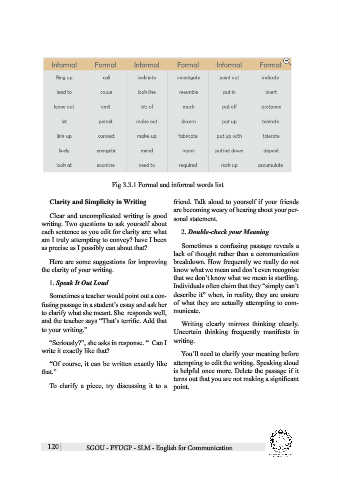
Fig 3.3.1 Formal and informal words list


                  Clarity and Simplicity in Writing           friend. Talk aloud to yourself if your friends
                                                              are becoming weary of hearing about your per-
                  Clear and uncomplicated writing is good     sonal statement.
               writing. Two questions to ask yourself about
               each sentence as you edit for clarity are: what   2. Double-check your Meaning
               am I truly attempting to convey? have I been
               as precise as I possibly can about that?         Sometimes a confusing passage reveals a
                                                              lack of thought rather than a communication
                  Here are some suggestions for improving  breakdown. How frequently we really do not
               the clarity of your writing.                   know what we mean and don’t even recognise
                                                              that we don’t know what we mean is startling.
                  1. Speak It Out Loud                        Individuals often claim that they “simply can’t

                  Sometimes a teacher would point out a con-  describe it” when, in reality, they are unsure
               fusing passage in a student’s essay and ask her   of what they are actually attempting to com-
               to clarify what she meant. She  responds well,   municate.
               and the teacher says “That’s terrific. Add that   Writing  clearly  mirrors  thinking  clearly.
               to your writing.”                              Uncertain  thinking  frequently  manifests  in

                  “Seriously?”, she asks in response. “  Can I   writing.
               write it exactly like that?                      You’ll need to clarify your meaning before

                  “Of course, it can be written exactly like   attempting to edit the writing. Speaking aloud
               that.”                                         is helpful once more. Delete the passage if it
                                                              turns out that you are not making a significant
                  To  clarify  a  piece,  try  discussing  it  to  a  point.


                 120           SGOU - FYUGP - SLM - English for Communication

